Tying It All Together
Reflections on the festival of Raksha Bandhan and caring for those we love
This is a guest piece written by former staff member and longtime volunteer Rishi Narain. Rishi’s reflection takes our usual conversations about social infrastructure and brings them home: looking at family, the cost of protection, and what we owe to one another.
The views here are the author’s own.
Raksha Bandhan fell on August 28th this year, a wonderful festival observed by many in India. It’s one of my favorites, and not just because it involves the giving of sweets. After all, most festivals in India do.
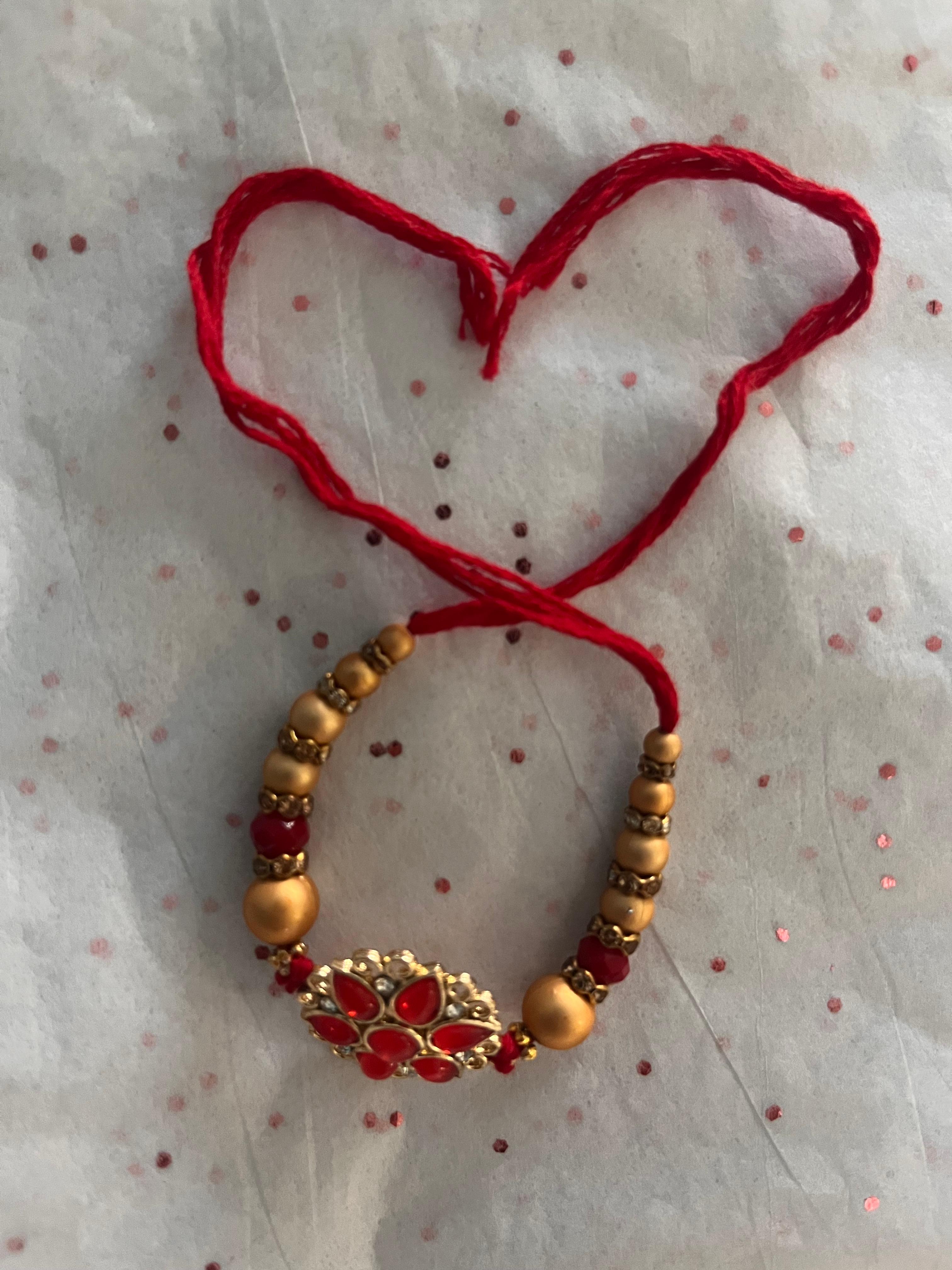
During this festival, brothers pledged protection to their sisters, who would symbolically tie Rakhi on their brother’s wrist as a reminder of that promise, and pray for their safety and prosperity. And in true Indian fashion, they fed their brother sweets, because we all know the way to an Indian man’s heart is through his stomach. Which is, I suppose, to say that we should be judged by the way we treat the women who feed us.
So as my sister and I sat down as we have for every year of my life, I happily ate Greek Baklava (very traditional) and reflected on what it meant to pledge protection to my sister. And to understand that, I should tell you about her.
She’s almost 10 years older than me, which means she had a hand in raising me. She loves Bollywood movies and music, especially the disco inspired sounds of the 70s. Let’s just say I don’t share her tastes. She’s something of a Disney adult. I’d make fun of her, but my ideal birthday is being left alone to marathon the Lord of the Rings trilogy, so maybe I shouldn’t throw stones, as the good book teaches. She’s been at this grown up thing longer than me, and I think she might be better at it than I am. She runs a successful Coaching and Communications business and has spent most of her life speaking in front of groups, which was always a challenge for me.
There’s one thing I haven’t explained about her, and it’s always a bit tricky for me. Because people should be allowed to define themselves.
My sister is legally blind.
I say this is tricky to explain because if I say she is legally blind, you might think that’s the most important thing about her. And admittedly, when we have to go somewhere she’s never been or do something she’s never done, it is the most important thing.
And I find that explaining it has her having a disability may not be the right way to go about it.
It might be more accurate to say she is Political.
And I don’t just mean that she likes to talk politics (we both do and do so frequently).
What I mean is that her existence is something that gets voted on by society. These things happen when you are disabled, a woman, a minority, an immigrant.
So, when I have to think about her protection, it becomes readily apparent that I alone can’t provide that. If I just had a sister who loved Disney, 70s Bollywood and a bottle of Coke and has religiously watched Young and the Restless since before I was born, it would be token protection.
But alas, it’s not that simple.
But alas, it’s not that simple.
My sister was not born blind. When she was 10, she had a near fatal reaction to a medication that left her with burns over 2/3rds of her body and destroyed her body’s natural ability to produce tears. The reaction also resulted in her having severe underlying respiratory issues.
Which is all to say that the COVID 19 pandemic was our personal hell.
Our family watched the news more closely than most, trying to make sense of a changing situation and the prospect of a disease that attacked the vulnerable and killed them by suffocating them.
I know some people claimed that being forced to take a vaccine was somehow against their religion.
And I will admit to thinking some downright sinful things about them, because my sister basically couldn’t leave the house for the better part of 4 years because people wanted the freedom to go out. And I’m a bit upset by that because my family wanted the same thing. It doesn’t quite feel fair that there’s a price for that kind of thing when you have to pay it.
I don’t really ask people for their opinion on COVID anymore. It’s fairly straightforward to me. Take the vaccine or else just admit that you think my sister should just stay home, and if she dies, she dies. And I’m not afraid to put it in terms that blunt.
Needless to say, I don’t get a lot of feedback after that.
So, I do find myself asking the question of what it takes to protect my sister. And the fact is, it’s very simple. It takes money to protect her.
I do think a lot about my late father, who was told he could probably sue the doctor who prescribed her the medicine over the phone from a golf course -- and receive a lot of money. His response was that he didn’t need anyone else’s money, he could take care of his own daughter. My dad was a proud man who had a strong sense of honor. I’d like to think I learned some of that from him.
I think about how he was able to keep a roof over our heads, pay for my sister’s care, find money to send my sister, and later me, to college (though in my case it was posthumously), and take us on the occasional vacation, all while earning 90% of our family’s income. I’m like a lot of men my age. We have an example from our fathers who made life look easy in a different day in age.
I earn more money than my dad ever did, but it feels like I can barely keep up taking care of myself.
Which is to say, I need help. And so do many others who have family members with needs. And it seems as though every day, another agency which used to provide support to vulnerable people has no money to spend, while at the same time the National Debt climbs to record highs, and we fight a meaningless war in the Middle East. We have always been at war in the Middle East. And there is no money to spend.
Governments at all levels are increasing surveillance of the people. When your sister is blind, you take a dim view of surveillance, because the phrase “it won’t affect you if you have nothing to hide” sounds even more like a threat. Anyone who makes that argument doesn’t have to worry about protecting someone who may be unable to protect themselves. And if we lose that, I wonder if we have anything worth keeping at all. It’s hard to put a price on something like that.
So, this year I find I must do that thing that I loathe most, which is ask for help when it comes to caring for my family. I am honor bound to protect her because she is my sister, and I am a dutiful Indian man. We care a great deal about our own honor. And sometimes we must accept that others come first. It’s a lesson I’ve had a hard time learning. I may need some help with that.
So maybe it’s a good thing that I am also American man. In both nations, it should be our privilege to care for one another.
I hope that with the many ways the world is changing, our commitment to protect those who need help has not been lost. The way I see it, I think we have the money, it’s a matter of how we spend it.
I want to protect my sister. And I want to protect everyone who isn’t my sister. I think the way we do that is to live in a peaceful world.
I may be biased, but I think the world is a better place with my sister in it. But it is also my duty to extend that same sentiment to those who may not have a brother they tie Rakhi on.
I hope our compassion is not bound simply with thread.