Forty Years of the Same Con
Four decades of trickle-down economics has worked out great. For the wealthy.
For the three decades before 1980, American incomes at the top and the bottom of the ladder rose at roughly the same pace. If inequality hadn’t dramatically widened starting in 1980, how much would the average working family be earning in 2026? Around $145,000. Instead, the median household earns $80,000.
What changed? From 1936 to 1980, the top income tax rate for individuals was 70% or higher. Today it’s 37%. During this same time, the social safety net has been gutted to pay for tax cuts that benefit the wealthiest households.
Reaganomics: Reverse Robinhood as Policy
In 1981, President Ronald Reagan signed a 185-page bill called the Economic Recovery Tax Act on his 688-acre ranch above Santa Barbara. His bill cut the top income tax rate from 70% to 50%. It carved a $750 billion hole in the federal budget. And Reagan delivered the pitch that would be repeated, in almost the same words, for the next forty years: cut taxes at the top, and the rewards will reach everyone.
In 1986, Reagan doubled down and boldly declared that his 1986 Tax Reform Act “is perhaps the greatest antipoverty program in history. It will take 6 million poor people off the income tax rolls entirely.” The receipts said otherwise.
The next administration ran the same play.
George W. Bush’s 2001 and 2003 cuts handed the top 1% of households an average tax break of $570,000 over the eight years that followed. A new category called “qualified dividends” was invented to let wealthy investors pay 15% on their dividend income instead of 35%. The nurses and teachers whose retirement accounts held a few mutual funds might have saved a couple hundred dollars from that change. The hedge-fund managers and corporate executives whose wealth sat in dividend-paying equities saved tens of thousands.
Then came Donald Trump. His administration’s 2017 Tax Cuts and Jobs Act delivered tax cuts of roughly $61,500 to households in the top 1%, and about $100 to households in the bottom 20%. One household got a down payment on a second home. The other got a tank of gas. In 2025, Trump’s One Big Beautiful Bill doubled down on poverty with low-income children among the hardest hit.
And he’s not done yet. In early April, the White House submitted a FY2027 budget that would cut domestic spending to its lowest levels since Eisenhower while boosting military spending to $1.5 trillion.
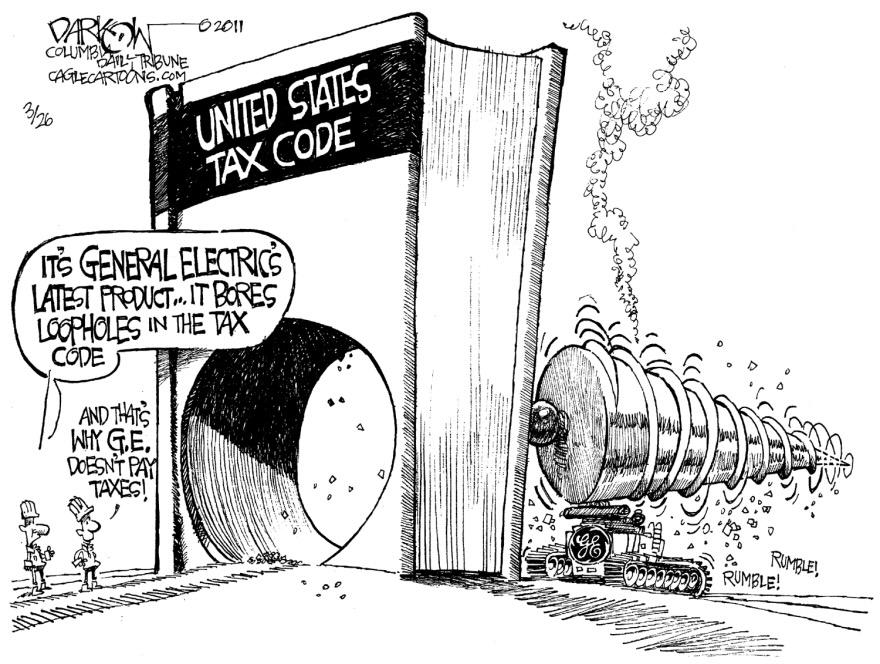
Today, the tax code is critical infrastructure for the ultra wealthy. It has been leveraged by every Republican administration since Reagan to expand wealth and opportunity for the few. The tax cuts and infrastructure have remained mostly untouched under every Democrat who followed.
And it is not just federal. The same values have been metabolized in statehouses across the country.
What You Can Do This Tax Week
The tax code hard-codes unfairness for tens of millions of American families. This Tax Week, join us in demanding one that works for all of us.
Contact your senators and representative. Tell them working families need a tax code that is critical infrastructure for workers, not the wealthy. The One Big Beautiful Bill cut $1 trillion from Medicaid and handed $1 trillion in tax giveaways to the top 1%. Trump’s FY2027 budget proposes to cut even deeper.
Check your statehouse calendar. Progressive tax measures — from billionaire taxes in California to wealth tax proposals in statehouses across the country — are being debated right now. So are copycat measures that mirror OBBBA’s Medicaid work requirements and documentation barriers. State legislative calendars are public. Know what yours is considering.
Forty years of the same con is not a policy failure. The tax code is working as intended — just not for most of us. Use your voice. If you need inspiration, our friends at Americans for Tax Fairness put together a toolkit to make it easy.