There is No Justice. There is JUST US.
How Cash Programs Can Help Communities Weather the Trump Storm.
There’s a saying we hear more and more these days:
“There is no justice. There is just us.”
For millions of households navigating rising costs, shrinking safety nets, and political cruelty disguised as fiscal policy, this statement isn’t just a slogan—it’s a gutting reality.
Donald Trump’s so-called “Big Beautiful Bill” offers yet another confirmation. Marketed as a pathway to prosperity, it’s actually a calculated blueprint for widening inequality:
Massive tax breaks for the wealthy.
Brutal cuts to food, healthcare, and basic cash supports for those who need them most.
A cruel indifference to children living in poverty, particularly in immigrant and Black and Brown communities.
The federal government should be a safety net, not a snare: a source of care and protection in hard times.
Instead, the Trump administration is doing the opposite, dismantling support systems and punishing those who need help most.
So what now?
Yes, we organize. We vote. We hold our elected officials accountable.
But families are slipping through the cracks right now.
And they cannot wait for D.C. to remember its duty to the people.
This is economic violence masquerading as a budget.
Tax Cuts for the Top 0.1%
Trump’s bill locks in and expands tax breaks that overwhelmingly benefit the wealthiest Americans and largest corporations. The top 0.1% stand to gain an average of over $300,000 per year, while the lowest-income families see net losses after factoring in benefit cuts.
A Gutted Child Tax Credit
The Child Tax Credit (CTC) should be one of our strongest tools to fight child poverty. Instead, the bill harms mixed-status families, blocking millions of U.S. citizen children from access. It also maintains income thresholds and refundability caps that ensure the poorest families receive the least support.
SNAP Cuts: Less Food, More Barriers
With $185 billion in cuts over ten years, the bill guts food assistance through expanded work requirements, cost shifts to states, and a freeze on benefit adjustments. More than 2 million people—including older adults, veterans, and working parents—could lose access.
Healthcare Cuts That Hurt the Most Vulnerable
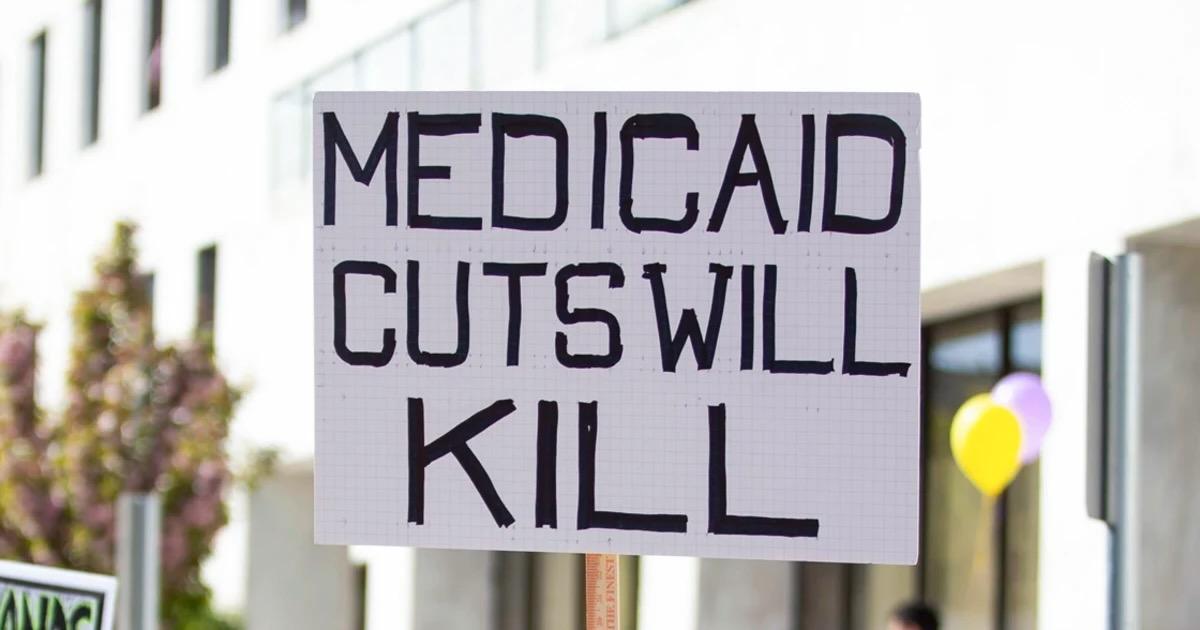
The budget bill slashes over $1 trillion from Medicaid and CHIP by 2034, potentially stripping coverage from up to 17 million people. Rural hospitals face mass closures. New red tape and work requirements will push even eligible families off the rolls.
The Bottom Line
This bill is a top-down wealth grab sacrificing public health, food security, and childhood stability to further enrich the wealthy.
It accelerates the racial wealth gap and destabilizes the already-precarious lives of tens of millions.
What We Know Works: Cash
Cash transfers are one of the most effective poverty alleviation tools we have, helping to build a bridge to stability, economic security, better health outcomes, and social mobility.
What sets direct cash transfers and guaranteed income apart from other forms of economic assistance is their flexibility and inherent dignity. Whether it’s a one-time transfer or regular monthly payments, these approaches provide people with what they need without conditions, work requirements, restrictions, or bureaucratic hoops. Rooted in trust, they allow individuals to direct funds where they’re most needed, giving them the breathing room to stabilize, care for their families and invest in their futures. That could mean paying rent, seeking medical care, providing normalized experiences for their children, or saving for education and long-term goals.
As federal cuts take hold, direct cash transfers are a powerful tool that allows communities to respond in real time, empowering people to meet urgent needs, prevent displacement, and restore stability.
For states, municipalities and nonprofits facing rising need and shrinking federal support, cash transfer programs aren’t just a stopgap—they are a powerful way to meet the moment with dignity, speed, and impact.
At mBOLDen Change, we’ve been funding emergency cash transfers and guaranteed income since 2020. Our approach is simple: Give people what they need. Trust them to use it well. The impact speaks for itself.
We’ve seen:
Parents cover rent, groceries, medical care, and childcare.
Youth re-engage with school, build savings, and plan for their futures.
Immigrant survivors pay down debt, escape unsafe housing, and access care.
How Direct Cash Programs Can Help Communities Meet This Moment
From Stockton to Jackson, from Chicago to rural Georgia, communities across the country are turning to direct cash transfers and guaranteed income as a powerful response to the federal government’s systemic failure to care for its most vulnerable.
Nonprofits, local governments, private funders, and grassroots organizers are coming together to support these programs for pregnant people, youth aging out of foster care, immigrant families, low-wage workers, and others pushed to the margins. Together, they’re meeting this moment head-on and proving what’s possible when communities take the reins and trust people with the resources to care for themselves.
This is community care.
This is harm reduction.
This is infrastructure we can build—right now.
The fight for justice won’t be won solely at the voting booth or in the halls of Congress.
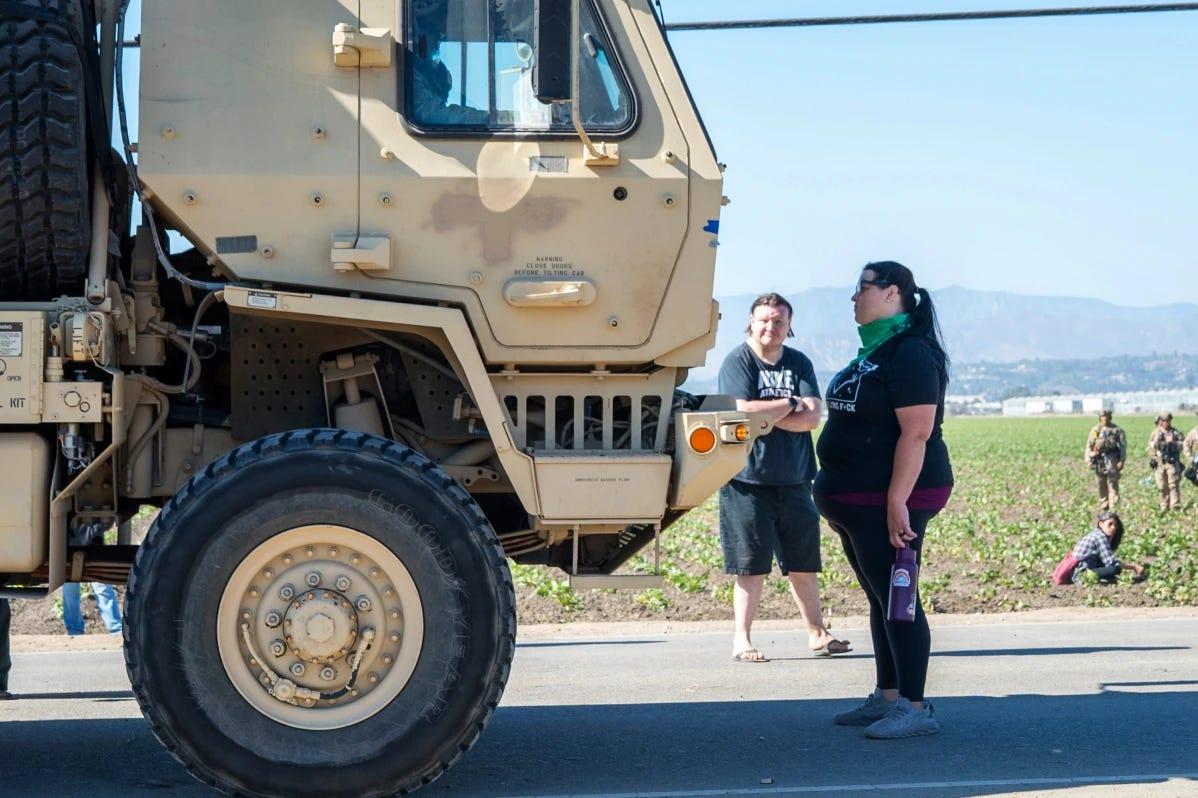
Across the country, it’s being forged now: in neighborhood clinics, in mutual aid circles, in cash pilots, in family kitchens, and among friends, neighbors and colleagues who refuse to look away.
Fund cash work. Prioritize those led by impacted communities.
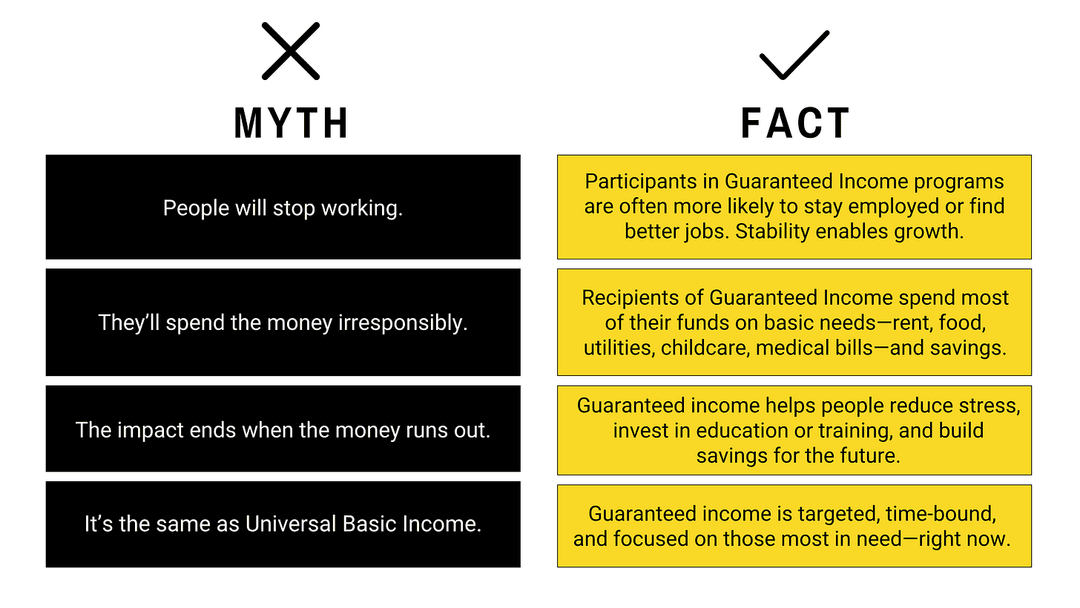
Correct the myths. Share stories. Share data. Disrupt stigma.
Push for policy rooted in community. Economic security and human dignity should be a right.
Make Your Voice Heard. In community spaces. At marches. In letters to your elected officials. At the polls.
“There is no justice.
There is just us.
All things that are are ours.
But we must care.
For if we do not care,
We do not exist.”
—Terry Pratchett
Let’s Set the Record Straight on Guaranteed Income