AI Runs on Our Water, Our Power and Our Work. What Should We Get Back?
What Alaska's oil dividend can teach California about claiming our share of AI
Voters in California recently rejected the “billionaire tax” and passed Prop. 42, constitutionally banning new wealth taxes. This outcome will almost certainly spend the next few years being litigated before landing back on a future ballot — this is CA after all and we apparently enjoy doing things twice.
But for today, let’s step around that particular fight (and the current soap opera at the top of Nvidia, a reminder of how much of this economy rides on a handful of people) and ask this basic question: since AI extracts our water, our power and our work product, what should we get back?
Saying the Quiet Part Out Loud
Usually, conversations about whether the public deserves a cut of an industry’s profits leads to accusations of wanting to stifle innovation or a lecture on the pitfalls of communism. But the tech giants building these systems aren’t talking about AI like it’s a better product or stepped-up innovation. They talk about it like it’s the asteroid that took out the dinosaurs.
Sam Altman and Dario Amodei have openly floated the idea of using AI’s massive profits to offset the economic upheaval their own technology might cause. This spring, OpenAI even published a paper calling for a public wealth fund, also writing:
“AI data centers should pay their own way on energy so that households aren’t subsidizing them.” - OpenAI, Industrial Policy for the Intelligence Age: Ideas to Keep People First
And in May 2026, Governor Newsom ordered state agencies to study revenue-sharing models alongside severance standards and retraining.
So the debate isn’t whether the public should share in the wealth AI creates or protected from the upheaval that is to come. Many of the evangelists behind the AI boom have already conceded this point. The question then is why we’re owed a share. Whether we frame this as “corporate charity,” a “safety net for displaced humans” or “royalties for using our shared resources” changes what comes next.
Every AI Model Is Built on Something We Already Paid For
AI models were trained on generations of human work product across literature, art, math, science, engineering, philosophy and much more that has been lifted off of the internet. Of course, the internet itself started as a publicly funded government project, with public universities training many of the researchers building these systems. At the end of the day, the companies behind these AI models have never received an invoice requiring them to pay for this knowledge.
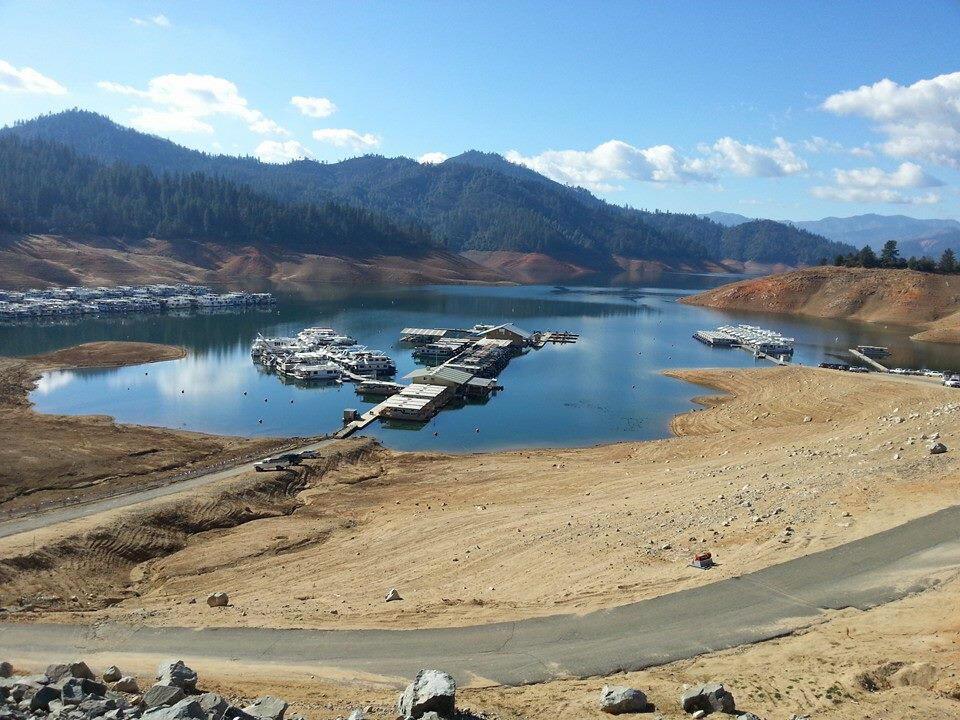
And then there’s the physical infrastructure. AI is run through giant, windowless warehouses that guzzle absurd amounts of water and electricity. In California, that comes straight out of natural resources and shared systems we all subsidize. Between 2019 and 2023, electricity use by California data centers nearly doubled, from 5.54 to 10.82 terawatt-hours, and their water use nearly doubled right alongside it. We’re talking about the same water Central Valley farmers ration during a drought, and the same electrical grid households pay for every month to keep their AC or heat on.
What Alaska Figured Out 50 Years Ago
Who owns Alaska’s oil? The answer is found in their state constitution: Alaska’s natural resources belong to the state, held for the maximum benefit of its people.
In 1976, voters created the Permanent Fund, which captures at least 25% of the state’s mineral royalties. And since 1982, it has produced an annual dividend check to nearly every resident, more than 600,000 people a year.
Because of how it was set up, Alaskans don’t treat that check like government welfare. It’s simply the people’s cut of a resource that exists for the common good. Economists have also studied the fund for decades and found it didn’t push people out of work, which is one of the most trotted-out talking points against giving people cash.
What We Can Adapt from Alaska
Alaska provides a possible pathway forward. It also shows us the potholes and gaps on the path that we should avoid.
The potholes. Since 2018, Alaska has pulled about 5% of the fund’s value each year, with lawmakers deciding how to split it between residents and the state budget. In 2025, the legislature used 85% of the money drawn from the fund that year to cover government spending, shrinking the dividend to $1,000, the lowest in state history after inflation. With no state income tax, the fund now pays for over half of state operations. The lesson is that if we are able to build a fund, we also need to protect the payout from being directed to supplement the state’s general fund.
This does not replace a real safety net. In recent years, Alaska’s payouts usually landed between $1,000 and $2,000. That’s great for winter heating bills or back-to-school shoes and clothing. It won’t save families from falling over the cliff if their jobs and careers are all but eliminated. If AI disrupts the job market the way its creators claim it will, we need to reimagine what economic security and a sustainable safety net looks like for everyone.
Oil is anchored. AI tech is not. Alaska could collect royalties on the oil because it was physically anchored to the land. And yes, AI companies could move out of the state to avoid some taxes or regulation. But while you can move a company’s headquarters to Texas in an afternoon, you cannot move the Central Valley’s water, California’s power lines, the existing data centers or the millions of Californians feeding these models every day. To have a public claim that actually sticks, we need to anchor it to the resources that can’t leave.
So, What’s the Solution?
If AI runs on public water, public power and our collective brainpower, what’s a fair cut for the public? And how do we build something permanent instead of a pilot that ends when the grant does (a cycle mBOLDen Change and every other nonprofit knows firsthand)?
I don’t have a pretty bow to tie all of this together. I do think viewing AI as resource extraction of public resources opens doors to a different conversation that isn’t about wealth taxes.
There is also a movement picking up steam about a "national AI dividend." But until states like California take the lead, a national dividend feels more like a nice panel discussion than a reality.