The Power of the Ballot, the Threat of the Map
As the Supreme Court hears arguments that could end federal protection against racial gerrymandering, millions of minority voters are casting ballots — but their votes may soon count for less.
The Case That Could Change Voting Rights
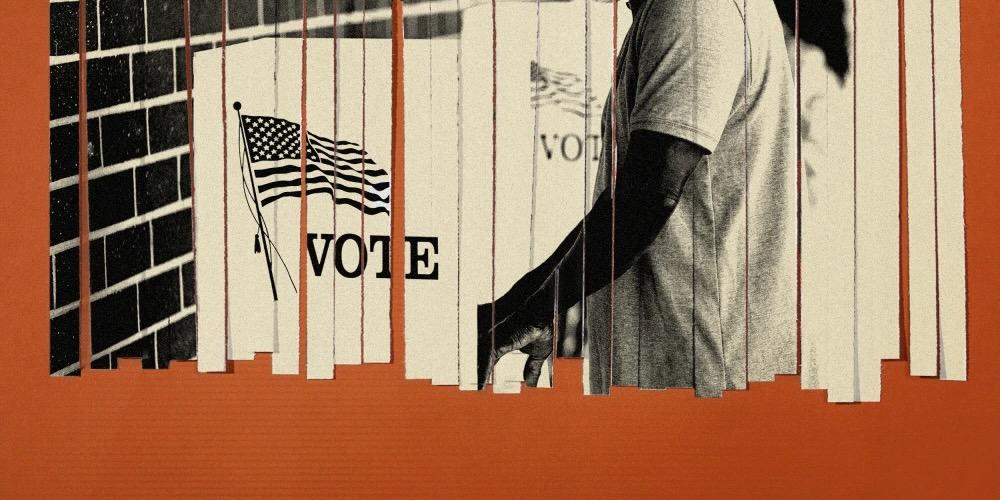
As we publish this piece, the U.S. Supreme Court is set to hear arguments in Louisiana v. Callais (consolidated with Robinson v. Callais), one of the most consequential voting-rights cases in a generation. At stake is Section 2 of the Voting Rights Act, which has provided minority voters a powerful tool to challenge racially discriminatory redistricting plans for sixty years.
The timing is pointed. In communities across the nation, tens of millions are exercising their most fundamental democratic right and casting ballots in the 2025 off-year elections. Local elections decide how schools are run, how housing is built, how transit operates, and how much we invest in our neighbors’ well-being. They remind us that democracy is not an abstraction; it is the sum of choices made by everyday people.
But as those votes are dropped into boxes and counted in precincts, the Supreme Court is deciding whether the democratic process will still have any meaningful federal protection.
Civil Rights Law Is Being Turned on Its Head
The current dispute began with a simple fact: Louisiana’s congressional map did not reflect its citizenry. Although roughly one-third of the state’s residents are Black, the 2022 map contained only one majority-Black district out of six, effectively eroding the political power of Black voters across the state.
Black voters and civil-rights groups challenged the map under Section 2 of the Voting Rights Act, arguing that it denied them an equal opportunity to elect candidates of their choice. A federal court agreed. The judges found clear evidence of vote dilution and ordered the state legislature to draw a new map that included a second majority-Black district.
In response, lawmakers adopted a revised map in early 2024 that complied with the court’s order. But almost immediately, a group of white voters filed a new lawsuit, claiming that the new map was itself unconstitutional — that by considering race to remedy discrimination, the legislature had engaged in “racial gerrymandering” in violation of the Fourteenth Amendment’s Equal Protection Clause.
Their argument turns civil-rights law on its head: that the very tools designed to correct racial inequity now constitute racial discrimination. If the Court embraces that reasoning, it could gut Section 2 or narrow it beyond recognition, erasing one of the last remaining federal safeguards against racially biased redistricting.
This is also not the first time Louisiana v. Callais has reached the high court. In its previous term, the justices weighed whether to leave in place the state’s court-ordered map but declined to rule, scheduling the case for reargument this term. In doing so, the Court agreed to take up an even higher-stakes question: whether any race-conscious effort to fix a Voting Rights Act violation violates the Fourteenth or Fifteenth Amendments to the U.S. Constitution.
Republicans in Louisiana are urging the Court to prohibit the use of race in drawing voting lines altogether, a decision that could upend decades of precedent and deliver another blow to the nation’s civil-rights architecture.
Just two years ago, the Court narrowly upheld Section 2 in an Alabama case (Allen v. Milligan), with Chief Justice John Roberts and Justice Brett Kavanaugh joining the liberal justices to reaffirm its framework. But even then, Kavanaugh signaled that “race-based redistricting cannot extend indefinitely into the future.” Both he and Roberts, who also authored the decision ending affirmative action in college admissions in Students for Fair Admissions v. Harvard, could again hold the balance of power in Callais.
The Silence in the Constitution
Voting is fundamental to the exercise of democracy. Many consider it the most fundamental right in a democracy. Yet, the Constitution does not actually guarantee that Americans have the right to vote. Instead it delegates election rules to the states, limiting them only through amendments that prohibit discrimination based on race, sex, or age. The framers left the franchise intentionally open-ended — a gap that, in practice, has allowed states to decide not only who votes but whose votes count.
The Voting Rights Act was meant to close that gap. Signed by President Lyndon B. Johnson in 1965, it transformed moral aspiration into enforceable law. It established pre-clearance — requiring jurisdictions with histories of discrimination to obtain federal approval before changing voting procedures — and it empowered courts to strike down racially gerrymandered maps.
“Every American citizen must have an equal right to vote,” Johnson told Congress. “There is no reason which can excuse the denial of that right.”
For nearly half a century, that promise held. Then the Roberts Court began dismantling it, piece by piece.
How the Guardrails Fell
Like dominoes falling, the sequence was deliberate and devastating.
2013 – Shelby County v. Holder invalidated the formula used to determine which jurisdictions were subject to the pre-clearance requirements of the Voting Rights Act (Section 5). Chief Justice John Roberts wrote that “things have changed in the South,” essentially deeming racial discrimination was largely a relic of the past. Within hours, Texas announced new voter-ID requirements. Other states followed with shorter early-voting windows, polling-place closures, and aggressive voter-roll purges. Nearly 1,700 polling places vanished in previously covered jurisdictions: one closing every two days.
When civil-rights groups warned that Shelby would invite a new wave of suppression, the Court’s majority replied that Section 2 remained available to challenge discriminatory practices. That assurance rings hollow now that Section 2 itself is on the chopping block.
2019 – Rucho v. Common Cause ruled that partisan gerrymandering was beyond judicial reach — a “political question” courts couldn’t touch. The distinction between racial and partisan motives was academic. In modern America, party and race often track one another. The decision blessed extreme map-drawing so long as legislators claimed partisan rather than racial intent.
After the 2020 census, Texas redrew its districts to ensure that white voters would control the majority, ultimately leading to Republicans winning 25 of the state’s 38 congressional seats in 2022.
2025 – Louisiana v. Callais — Now comes the potential final blow. Weaken federal oversight (Shelby), remove judicial remedies (Rucho), then eliminate the last enforcement mechanism. Once those guardrails are gone, states can redraw lines, purge rolls, and manipulate rules without fear of federal review.
The insidious danger lies in its appearance of legality. Nothing seems overtly violent. The forms of democracy remain intact even as their substance drains away.
When Representation Disappears
Legal scholars will debate whether Section 2 exceeds Congress’s authority or violates equal-protection principles. Those questions matter, but they obscure a simpler one: when representation disappears, whose voices will count?
If Section 2 falls, communities of color will lose the ability to challenge maps that divide and diminish them. The courts will close their doors to claims of vote dilution. State constitutions may offer some relief, but those safeguards are uneven and easily undone.
The consequences land hardest in neighborhoods whose boundaries are redrawn to split a Black community in two; in city councils that no longer mirror the demographics of the people they serve; in transit systems and housing policies shaped by representatives who no longer reflect their communities.
Congress Has the Power to Act
The Supreme Court may decide what the Voting Rights Act means, but Congress decides whether it exists. Congress has always had the power to protect the right to vote. What it has lacked is the will.
Bills to strengthen those protections have been written, introduced, and reintroduced — only to die in committee or on the Senate floor.
The John R. Lewis Voting Rights Advancement Act would restore pre-clearance with a modernized formula.
The Freedom to Vote Act would set national standards for early voting, same-day registration, and mail-in ballots while banning partisan gerrymandering in federal elections.
The Deceptive Practices and Voter Intimidation Prevention Act would create penalties for disinformation campaigns.
These are not radical proposals. They are the bare minimum of a functioning democracy: the administrative equivalent of keeping the lights on. And yet, year after year, our elected leaders have allowed that light to flicker and dim.
One Person, One Vote?
The struggle over voting rights has always been about more than procedure. It is about who is seen as fully part of “We the People.” The tactics change — literacy tests and poll taxes in one era, voter-ID laws and map manipulation in another. But the underlying impulse is constant: to define citizenship and limit the exercise of voting narrowly enough to preserve power.
The demise of democracy often begins quietly — when citizens stop believing their votes and voices matter, or when that belief becomes true.
The surest way to destroy democracy is not to abolish elections but to hollow them out: to preserve the rituals of voting while stripping away the rights and safeguards that make those votes fair. We need only look to China, Russia, and other authoritarian regimes to see how this plays out. Each time the courts narrow who may vote or whose votes count, the circle of representation contracts. Each time the public shrugs, the contraction accelerates.
The right to vote — freely, fairly, and easily — has never enforced itself. It survives only through vigilance.
Sixty years ago, President Johnson addressed Congress after the violence in Selma: “It is wrong — deadly wrong — to deny any of your fellow Americans the right to vote in this country.”
That conviction became the moral foundation of the Voting Rights Act.
Today, the question before the Supreme Court (and all of us) is whether that conviction still holds.
One person, one vote.
A republic, if we can keep it.