Mexico Is Reducing Poverty. America Is Criminalizing It.
Reading this Guardian piece about Mexico’s historic gains in reducing poverty got me thinking about a recent conversation with a friend, who shared their parent’s deep skepticism toward people receiving public benefits — an attitude I’ve heard many times before: that poverty is a personal failing, and help should be rationed.
That skepticism is more than cultural; it’s baked into policy. In the U.S., poverty is often demeaned or outright criminalized — as the recent homeless sweeps in D.C make clear. And, under the Trump administration, even the most basic supports now come with new barriers and conditions, forcing people to jump through hoops for help — if they qualify at all.
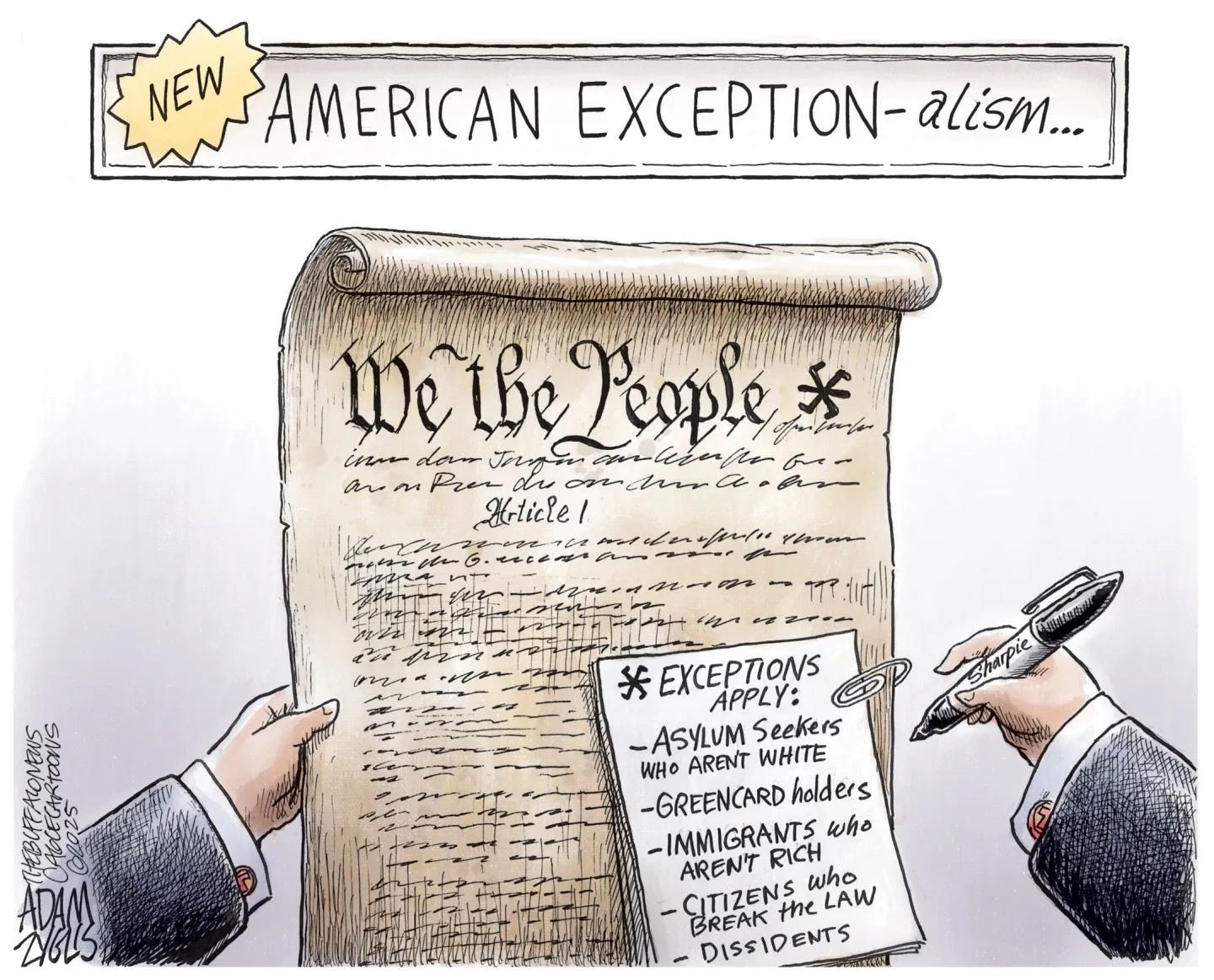
By contrast, Mexico has taken the opposite approach, treating support as a basic obligation of the state. And, here’s where America runs into another obstacle: the deeply ingrained belief that our problems are unique, and therefore unsolvable by looking abroad. The U.S. has always resisted learning from other nations’ solutions.
Perhaps the only thing more deeply embedded in the American psyche than the “bootstraps” myth is the idea of ”exceptionalism.”
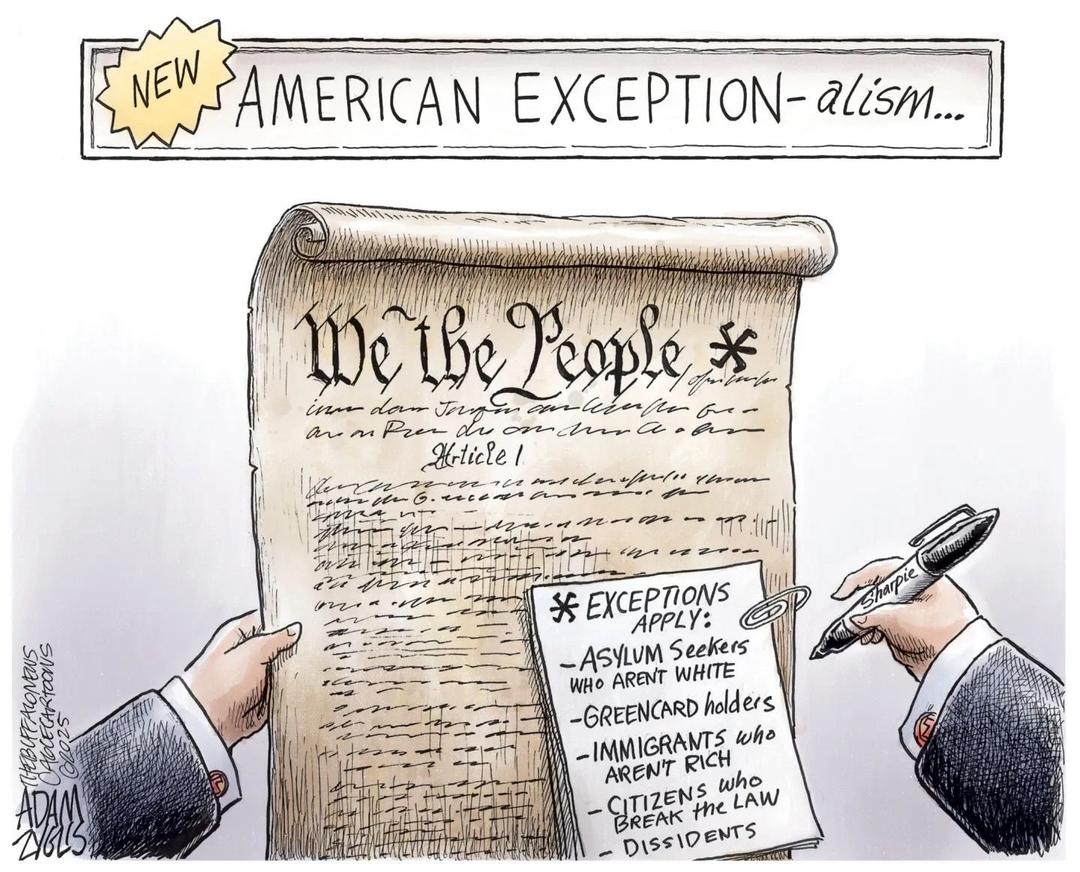
For many, a foreign example is not just irrelevant — it’s unthinkable. Today, that resistance has devolved into something darker: open hostility toward immigrants themselves. I’ll spend more time on that in a future piece. For now, back to Mexico and what we can learn from our southern neighbor.
And, no, America is not Mexico — or Europe — where the U.S. already lags behind on measures like poverty and social mobility. But that’s exactly why Mexico’s story matters. It shows what’s possible when a government begins by putting the dignity of its poorest citizens first. That choice is worth paying attention to — and worth emulating.
Por el bien de todos, primero los pobres.
In Mexico, between 2018 and 2024, nearly 13.4 million people were lifted out of poverty — a 26% reduction — thanks to a slate of policies under former President Andrés Manuel López Obrador (AMLO). The tools were simple but powerful: raising the general minimum wage from 88.36 pesos in 2018 to 278.80 pesos by 2024 — more than tripling it — while also expanding pensions for seniors, creating stipends for young apprentices and investing in rural farmers.
These weren’t pilot projects or temporary “stimulus” checks. They are structural, nationwide commitments to put money directly in people’s hands. Families used that support to pay rent, put food on the table, and sustain small businesses.
This wasn’t just economic policy; it was a return to a core tenet of Mexico’s political identity, one that had been sidelined for decades in favor of a market-first approach. At the heart of this shift was a belief that the state has a responsibility to ensure social well-being. Or as López Obrador declared in the slogan that defined his presidency: “Por el bien de todos, primero los pobres” — For the good of all, first the poor.
That commitment is rooted in history. Mexico’s 1917 Constitution was revolutionary for its time, enshrining social rights for all citizens, including the right to education, land, and labor protections. This historical backdrop underscores why today’s gains resonate so deeply.
Now, President Claudia Sheinbaum has pledged to continue along this path, carrying forward the agenda of the so-called “Fourth Transformation” and sustaining the social policies that helped deliver these historic reductions in poverty.
Not a Perfect Story
Of course, progress is never seamless. Regional disparities remain stark: while northern states surged ahead, southern states like Chiapas and Guerrero lagged behind. Critics argue that these historic gains in poverty reduction have come at a cost. The focus on direct cash transfers and pensions has led to a significant defunding of other social services, particularly in healthcare, where the number of people without access more than doubled — from 20.1 million in 2018 to 50.4 million in 2022.
The challenges extend beyond social policy. AMLO’s signature project, the Mayan Train, became a flashpoint, drawing criticism from environmentalists, indigenous leaders, and NGOs who argue that high-biodiversity sites and indigenous territories are being put at risk without meaningful consultation. When civil society groups sought to defend these rights, they faced dismissive processes and direct attacks, with the president accusing them of acting on behalf of foreign cabals rather than their own communities. Such rhetoric, combined with broader assaults on foreign-funded NGOs and a free press, has raised alarms about the erosion of democratic institutions and the narrowing of civic space.
The reality is that no society overcomes inequality in a single sweep; progress takes time — often generations. Just look at the U.S. for proof of the ebbs, flows and backsliding. Looking ahead, the question is whether Mexico can sustain its gains while addressing these shortcomings. While these challenges don’t erase the progress, they remind us that stability at scale requires more than short-term wins: it requires strong democratic institutions and a commitment to ensuring that progress reaches everyone.
A Contrast with the U.S.
Mexico is proving poverty can be reduced; America, meanwhile, is choosing policies that make it worse. Our politics are shaped by a narrative of merit — the belief that human dignity must be earned. Under the Trump administration, cuts to Medicaid, restrictions on food assistance, and the criminalization of homelessness all send a clear signal about whose humanity is expendable.
Policy choices can transform life from constant crisis to stability and dignity. Mexico has shown that by making a comprehensive investment in workers — through higher wages, universal pensions, and direct support for young people and farmers — families can move beyond survival toward stability. Beyond the economic gains, this approach has produced measurable improvements in well-being: greater food security, stronger safety nets and more dignified living conditions. In the U.S., by contrast, the basic conditions of dignity are being treated as negotiable, rather than as the foundation of a just society. Mexico’s approach flips this by treating a baseline of security as a universal responsibility.
What America Could Learn From Mexico
Mexico’s story isn’t about perfection, nor is it a blueprint. It’s about possibility — and about choices. It shows what can happen when a nation makes poverty eradication a priority. Poverty may also be shaped by global forces — economic shocks, climate crises, migration — but its severity at home reflects national political will.
For those of us in the U.S. fighting for equity, this isn’t about importing a foreign model. It’s about reckoning with our own history of successes and failures, interrogating our values, and challenging why we continue to treat human dignity as conditional.
At its core, Mexico’s example is less about specific programs and more about values. It demonstrates what’s possible when the economic security of the most vulnerable is treated as the starting point of governance, not an afterthought. America today shows us the cost of treating dignity and stability as negotiable.
The question is not whether we can afford to end poverty, but whether we have the imagination and courage to make stability and dignity the floor of a just society — not the ceiling.